
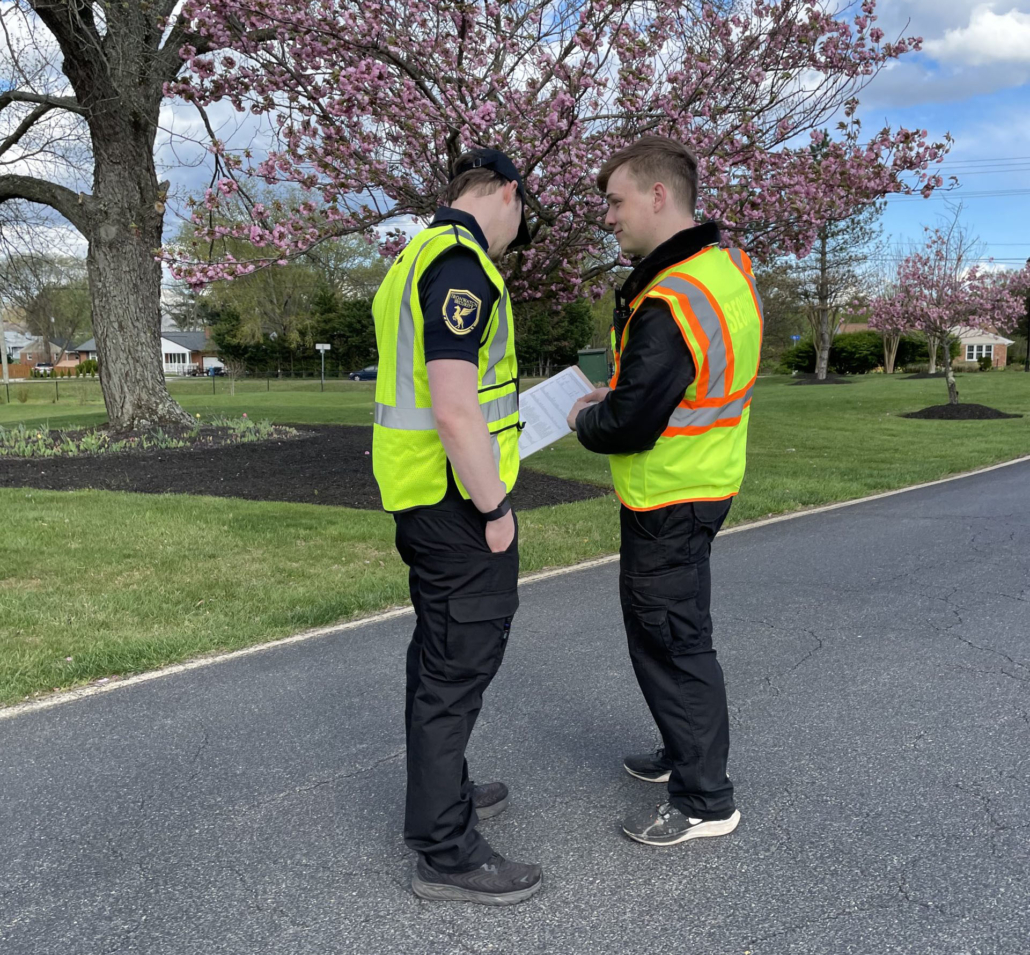
How to Vet a Security Company in Virginia: Questions Every Client Should Ask
/in Armed Security/by Danny OsmanHow to Vet a Security Company in Virginia: Questions Every Client Should Ask
Choosing the wrong security company can expose your property, your tenants, and your business to serious risk. In Virginia, the standards are clear — but not every company meets them. Here is exactly what to ask before you sign anything.
Start With Licensing — It Is Non-Negotiable in Virginia
Virginia law requires every private security business to hold an active license issued by the Department of Criminal Justice Services. This is not a recommendation — it is state law, and operating without it is a criminal offense. Before any conversation goes further, ask the company for their DCJS business license number and verify it yourself at the DCJS public registry.
Do not accept a PDF copy of a license as sufficient proof. Licenses expire and must be renewed. A company that held a valid license last year may be operating on an expired credential today. The verification takes two minutes and protects you from significant liability exposure if an unlicensed officer is ever involved in an incident on your property.
Virginia’s DCJS registry is publicly searchable. A quick lookup by company name will show you license status, expiration date, and any disciplinary history. If a company resists providing their license number for verification, treat that resistance as a disqualifying signal.
Individual Officer Registration Is Separate From Business Licensing
Even if the company is properly licensed, every individual security officer they deploy must also hold a current personal DCJS registration. Armed officers carry a separate armed registration requirement with additional training and background check standards.
Ask any prospective company whether they can confirm that all assigned officers are currently registered. Request documentation. A professional company will provide this without hesitation — because they track it as part of their standard compliance program.
Officer registrations can also be verified through the DCJS public registry. A company that cannot quickly produce a roster of currently registered officers for your site is a company that may not be actively tracking compliance. That gap is your legal exposure.
Insurance: What You Actually Need to See
A licensed company that carries inadequate insurance is still a liability risk. At minimum, your security contractor should carry general liability insurance covering at least $1 million per occurrence and workers’ compensation insurance covering all deployed officers.
The critical step: request a certificate of insurance that names your organization as an additional insured. This is standard practice and takes a legitimate company less than 24 hours to produce. Without this, if a security officer causes property damage or injures a third party while on your site, you may face legal exposure even though you were the client, not the employer.
Review the certificate carefully for coverage dates and listed exclusions. Some policies exclude coverage for armed officers or for specific incident types. If your engagement involves armed personnel, confirm that armed officer liability is explicitly covered.
Workers
Virginia law requires most employers to carry workers’ compensation insurance. When a security company sends officers to your property, those officers are working on your premises — and without the contractor’s workers’ comp coverage confirmed in writing, you could be held liable for injuries that occur during a shift.
This is one of the most overlooked risks in security contracting. A certificate of insurance showing active workers’ comp coverage, with limits sufficient for your jurisdiction, should be a non-negotiable condition of any contract.
Ask specifically whether coverage applies to all officer classifications they deploy, including part-time, seasonal, and subcontracted personnel. Some companies carry workers’ comp only for their W-2 employees and use 1099 contractors to fill shifts — a structure that can leave significant coverage gaps on your property.
Experience With Your Specific Property Type
Security is not a uniform skill set. A company that excels at construction site patrol may be entirely unprepared for corporate lobby work, hospital security, or HOA residential patrol. Each environment demands different officer temperament, training, and protocols.
Ask prospective companies for specific client references in your industry. If you manage a mixed-use development, ask whether they have current clients in property management. If you are running a hospital, ask whether their officers have healthcare-specific de-escalation training. Generic security experience is not the same as relevant security experience.
The best security companies will have developed distinct training tracks and standard operating procedures tailored to different property types. A company that applies the same approach to a retail strip center and a corporate campus has not done this work.
Local Experience in Northern Virginia and the DC Metro Area
Regional knowledge matters more than most clients realize. A security company with deep roots in the Northern Virginia and DC metro area understands the local law enforcement landscape — which agencies patrol which jurisdictions, how to coordinate with Arlington County Police versus Fairfax County Police versus Metropolitan Police in DC, and what the specific threat patterns look like in your area.
Companies that operate primarily in other regions and expand into Northern Virginia often lack these relationships and this institutional knowledge. Ask specifically about their current operational footprint in your jurisdiction before proceeding.
Local experience also means familiarity with Virginia-specific legal requirements — from DCJS licensing standards to trespass authority protocols to the specific rules governing armed security in commercial settings. These details matter when an incident occurs.
Written Post Orders and a Formal Security Plan
Professional security companies do not improvise. Every client engagement should begin with a site assessment followed by written post orders that document officer responsibilities, patrol routes, access control procedures, emergency escalation protocols, communication requirements, and reporting obligations.
If a company cannot show you a sample set of post orders, or treats this as unnecessary overhead, that is a significant warning sign. Post orders are not bureaucracy — they are the foundation of accountability. They define what an officer is supposed to do, which means they also define what an officer failed to do when something goes wrong.
Post orders should be site-specific, not generic. A template that replaces client names but otherwise remains unchanged across all engagements suggests a company that does not invest in understanding your specific environment or risk profile.
Daily Activity Reports and Incident Documentation
Beyond post orders, ask what documentation you receive after each shift. A well-run security company provides daily activity reports summarizing patrol activity, access events, observations, and any unusual circumstances — even when nothing significant occurred.
When incidents do happen, formal incident reports create a documented record that protects you in insurance claims, premises liability litigation, and regulatory inquiries. Companies that do not produce consistent documentation are also companies that cannot demonstrate their value over time — and cannot defend your organization when it matters most.
Ask to see sample DAR and incident report formats before signing a contract. The quality of these documents — their structure, specificity, and completeness — tells you a great deal about the professional standards the company actually maintains in the field.
Officer Quality: Where Most Companies Quietly Cut Corners
DCJS minimum training requirements establish a floor — not a standard of excellence. The best security companies in Northern Virginia invest significantly in hiring standards and ongoing training that go well beyond what the state requires.
Ask about their hiring criteria. Do they prioritize candidates with military or law enforcement backgrounds? What does their background check process look like beyond the state minimum? Do they conduct drug testing? What ongoing training do officers receive after initial certification? High-quality answers to these questions distinguish professional operations from companies that simply fill shifts.
Officer quality directly determines client outcomes. A single poorly trained officer who mishandles a confrontation, fails to document an incident properly, or abandons a post can expose your organization to litigation and reputational harm that far exceeds the cost of hiring a company with higher standards.
Officer Retention and Turnover Rates
Officer turnover is a proxy metric for overall company quality. Companies that pay poorly, treat officers poorly, or deploy them in unsafe conditions without adequate support experience high turnover — which means your property is constantly being covered by new, inexperienced personnel who do not know your site, your tenants, or your protocols.
Ask directly: what is their average officer tenure? What do they do to retain quality officers? A company confident in its retention will answer this directly. A company that deflects or dismisses the question is telling you something important.
High turnover also creates continuity problems during critical security situations. An officer who has been on your site for two weeks does not know who belongs in the building, which tenants have after-hours access, or where your utility shutoffs are. These gaps are real vulnerabilities.
Supervisor Coverage and Quality Control Programs
Ask how the company supervises the officers they deploy. Regular supervisor site visits — unannounced and documented — are a hallmark of a well-run security operation. Without supervisory oversight, officer performance degrades over time regardless of initial training quality.
Quality control programs should include periodic post inspections, review of daily activity reports for completeness and accuracy, and a formal feedback loop between client management and company leadership. A security company that cannot describe its QC program in concrete terms does not have one.
Ask specifically: how often will a supervisor physically visit your site? What happens when a supervisor identifies a performance issue with an assigned officer? What is the escalation path if you as the client are dissatisfied with officer performance? These questions reveal the operational maturity of the organization you are considering.
Response Time and On-Call Protocol
Security incidents do not follow business hours. Ask what the company’s on-call protocol is for after-hours incidents, officer callouts, and emergency situations. A professional company has a 24-hour operations center or dedicated on-call management team that can respond to your call within minutes, not hours.
If an assigned officer does not show up for a shift — a near-universal operational reality — how does the company handle coverage? What is their guaranteed response time for a replacement? Companies that rely on officers to find their own replacements have no real backup coverage protocol.
Test this before you sign a contract. Call the company’s after-hours line at an off-peak time and see how long it takes to reach a live person with operational authority. The response you get will tell you more than any sales presentation.
Technology Integration: Cameras, Access Control, and Real-Time Monitoring
Modern security programs integrate human officers with technology systems. Ask whether the company has experience integrating with your existing camera systems, access control platforms, and alarm infrastructure. A security company that operates independently of your technology stack is delivering significantly less value than one that leverages it.
Real-time monitoring capabilities matter as well. Some security companies offer remote monitoring services that can supplement on-site coverage during low-activity periods, reducing costs while maintaining visibility. Ask whether this is available and what the integration requirements are.
Technology also creates accountability. GPS-tracked patrol systems, digital log entries, and time-stamped activity reports give you objective data on what your officers are actually doing during their shifts — independent of self-reported documentation.
Contract Terms That Protect You
Before signing any security services contract, review it for terms that could work against your interests. Key provisions to evaluate include: termination notice periods (30-60 days is standard; longer periods favor the vendor), indemnification language, rate escalation clauses, and provisions that limit your ability to directly hire officers who worked on your site.
Ask specifically about the company’s policy on officer reassignment. If an officer assigned to your property is reassigned to another client without your input, that decision can disrupt continuity at your site. A well-structured contract includes provisions for client input on officer assignments and replacements.
Ensure the contract clearly defines the scope of services, the minimum coverage hours guaranteed, and what constitutes a breach. Vague contract language that gives the vendor broad discretion to modify coverage or pricing is a negotiating risk you should address before signing.
Pricing Transparency and What It Tells You
The way a security company structures and presents its pricing reveals as much as the number itself. A transparent, itemized proposal that breaks out officer billing rates, supervisor coverage, administrative fees, and any technology costs signals a company that is comfortable with scrutiny. An opaque all-in rate with no breakdown is a red flag.
Extremely low pricing is almost always a warning sign in the security industry. Security companies compete on labor costs — and the only sustainable way to undercut the market significantly is to pay officers less, train them less, and supervise them less. Those tradeoffs have real consequences for your property.
The right question is not ‘who is the cheapest?’ but ‘what is the total cost of a security failure?’ The answer to that question almost always justifies paying a premium for verified quality.
Red Flags That Should End the Conversation
Some warning signs should immediately disqualify a security company regardless of how competitive their pricing appears. These include: inability to produce DCJS license documentation on request, no certificate of insurance naming you as additional insured, no written post orders or formal site assessment process, and vague or evasive answers about officer training.
Other disqualifying signals: a company that cannot provide verifiable client references in your industry, one that uses high-pressure sales tactics or pushes for a contract signature at the first meeting, or one whose proposal contains terms that are materially different from what was discussed verbally.
Price should never be the primary driver of your security vendor decision. The cost of an incident involving an unqualified, uninsured, or unlicensed security officer will far exceed any savings realized by choosing the cheapest option. IronWatch Security meets every standard outlined in this guide and welcomes the scrutiny.
Ready to Work With a Security Company That Checks Every Box?
IronWatch Security is DCJS-licensed, fully insured, and has served Northern Virginia, Arlington, Fairfax, and the DC metro area with professional armed and unarmed security services. Contact us today for a free site assessment.
 /wp-content/uploads/2025/01/fulllogo_transparent-color.png
0
0
Danny Osman
/wp-content/uploads/2025/01/fulllogo_transparent-color.png
Danny Osman2026-05-31 10:00:002026-05-31 10:00:00Retail Shopping Center and Strip Mall Security in Northern Virginia
/wp-content/uploads/2025/01/fulllogo_transparent-color.png
0
0
Danny Osman
/wp-content/uploads/2025/01/fulllogo_transparent-color.png
Danny Osman2026-05-30 10:00:002026-05-30 10:00:00Government Contractor Office and Cleared Facility Security in Northern Virginia
/wp-content/uploads/2025/01/fulllogo_transparent-color.png
0
0
Danny Osman
/wp-content/uploads/2025/01/fulllogo_transparent-color.png
Danny Osman2026-05-29 10:00:002026-05-29 10:00:00Hospital and Medical Center Security in Northern Virginia
https://www.ironwatchsecurity.com/wp-content/uploads/2025/07/Male-security-guard-with-portable-radio-transmitter-indoors.jpg
1250
2000
Danny Osman
/wp-content/uploads/2025/01/fulllogo_transparent-color.png
Danny Osman2026-05-28 10:00:002026-05-19 11:32:49Construction Site Security in Northern Virginia
/wp-content/uploads/2025/01/fulllogo_transparent-color.png
0
0
Danny Osman
/wp-content/uploads/2025/01/fulllogo_transparent-color.png
Danny Osman2026-05-27 10:00:002026-05-27 10:00:00House of Worship and Religious Institution Security in Northern Virginia
/wp-content/uploads/2025/01/fulllogo_transparent-color.png
0
0
Danny Osman
/wp-content/uploads/2025/01/fulllogo_transparent-color.png
Danny Osman2026-05-26 10:00:002026-05-26 10:00:00Data Center and Technology Campus Security in Northern Virginia
/wp-content/uploads/2025/01/fulllogo_transparent-color.png
0
0
Danny Osman
/wp-content/uploads/2025/01/fulllogo_transparent-color.png
Danny Osman2026-05-31 10:00:002026-05-31 10:00:00Retail Shopping Center and Strip Mall Security in Northern Virginia
/wp-content/uploads/2025/01/fulllogo_transparent-color.png
0
0
Danny Osman
/wp-content/uploads/2025/01/fulllogo_transparent-color.png
Danny Osman2026-05-30 10:00:002026-05-30 10:00:00Government Contractor Office and Cleared Facility Security in Northern Virginia
/wp-content/uploads/2025/01/fulllogo_transparent-color.png
0
0
Danny Osman
/wp-content/uploads/2025/01/fulllogo_transparent-color.png
Danny Osman2026-05-29 10:00:002026-05-29 10:00:00Hospital and Medical Center Security in Northern Virginia
https://www.ironwatchsecurity.com/wp-content/uploads/2025/07/Male-security-guard-with-portable-radio-transmitter-indoors.jpg
1250
2000
Danny Osman
/wp-content/uploads/2025/01/fulllogo_transparent-color.png
Danny Osman2026-05-28 10:00:002026-05-19 11:32:49Construction Site Security in Northern Virginia
/wp-content/uploads/2025/01/fulllogo_transparent-color.png
0
0
Danny Osman
/wp-content/uploads/2025/01/fulllogo_transparent-color.png
Danny Osman2026-05-27 10:00:002026-05-27 10:00:00House of Worship and Religious Institution Security in Northern Virginia
/wp-content/uploads/2025/01/fulllogo_transparent-color.png
0
0
Danny Osman
/wp-content/uploads/2025/01/fulllogo_transparent-color.png
Danny Osman2026-05-26 10:00:002026-05-26 10:00:00Data Center and Technology Campus Security in Northern Virginia
Our Industries

 DC Crime Is Down 37% — So Why Are Northern Virginia Businesses Investing More...
This site uses cookies. By continuing to browse the site, you are agreeing to our use of cookies.
AcceptLearn moreCookie and Privacy Settings
We may request cookies to be set on your device. We use cookies to let us know when you visit our websites, how you interact with us, to enrich your user experience, and to customize your relationship with our website.
Click on the different category headings to find out more. You can also change some of your preferences. Note that blocking some types of cookies may impact your experience on our websites and the services we are able to offer.
These cookies are strictly necessary to provide you with services available through our website and to use some of its features.
Because these cookies are strictly necessary to deliver the website, refusing them will have impact how our site functions. You always can block or delete cookies by changing your browser settings and force blocking all cookies on this website. But this will always prompt you to accept/refuse cookies when revisiting our site.
We fully respect if you want to refuse cookies but to avoid asking you again and again kindly allow us to store a cookie for that. You are free to opt out any time or opt in for other cookies to get a better experience. If you refuse cookies we will remove all set cookies in our domain.
We provide you with a list of stored cookies on your computer in our domain so you can check what we stored. Due to security reasons we are not able to show or modify cookies from other domains. You can check these in your browser security settings.
We also use different external services like Google Webfonts, Google Maps, and external Video providers. Since these providers may collect personal data like your IP address we allow you to block them here. Please be aware that this might heavily reduce the functionality and appearance of our site. Changes will take effect once you reload the page.
Google Webfont Settings:
Google Map Settings:
Google reCaptcha Settings:
Vimeo and Youtube video embeds: